VEN. 18 SEP. - 11h00
2026
Geometric excitations in topological flat bands
18 Sep 2026 - 11h00 Séminaire | theorie | 
🧑🏫 Yuzhu Wang
🎓 LPMMC
📍 Lieu : Salle Roger Maynard G-421
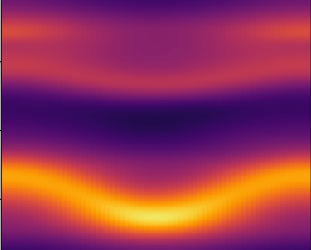
Geometric excitations provide a new way of probing the internal structure of fractional quantum Hall (FQH) states beyond their more familiar topological properties. In this talk, we will focus on a particular class of such excitations, known as graviton modes, and ask how their physics changes when we move from Landau levels to fractional Chern insulators (FCIs).
We will start with a brief introduction to the basic concepts and formalisms used to describe FQH states, with an emphasis on the guiding center degree of freedom and its connection to quantum geometry. This will provide the background for understanding the microscopic origin of graviton modes and how they can be identified in strongly correlated topological bands. We then turn to FCIs, where an intriguing contrast can be found. Despite the absence of continuous rotational symmetry in the underlying lattice, both the FCI ground state and the graviton mode exhibit an emergent guiding center rotational symmetry. The excitation continuum, however, does not share this symmetry. This mismatch allows the graviton mode to couple much more strongly to the continuum, giving it a much shorter lifetime than in Landau levels. We will introduce a simple microscopic model that helps explain why this happens.
Finally, we will discuss how the graviton mode may be enhanced and detected experimentally in moiré materials, and what kinds of tuning strategies could make it more visible. We will also briefly discuss how this picture can be generalized beyond spin-two graviton modes to geometric excitations with higher spins and what exciting physics can be expected there.